
Back to blog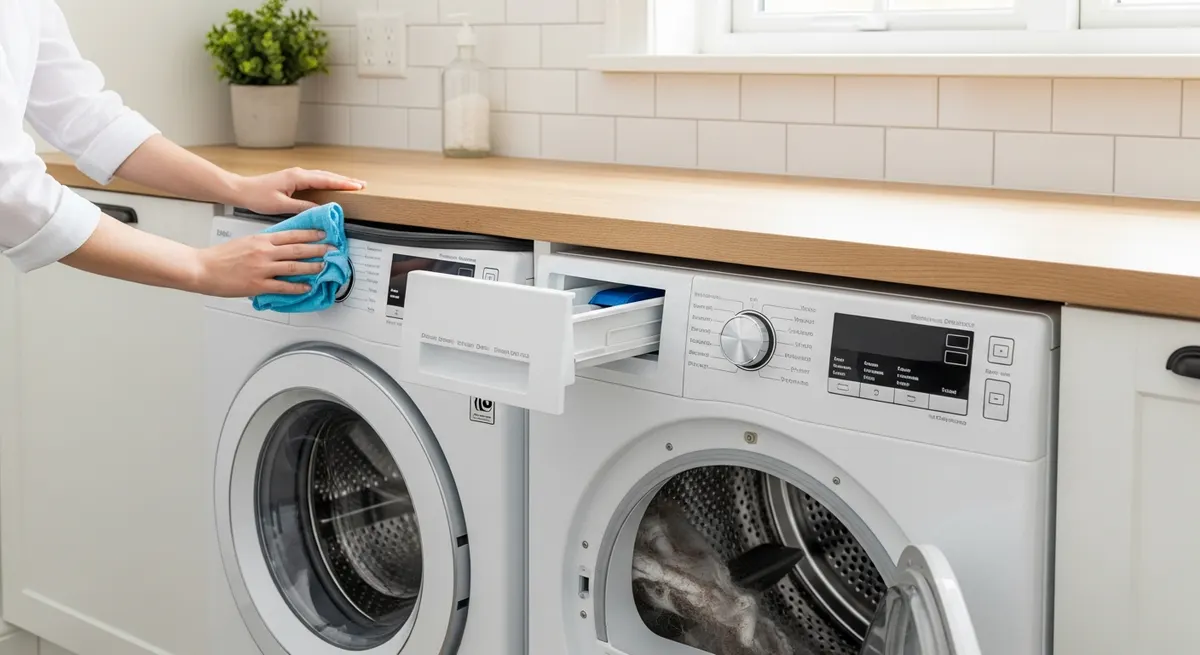 Maintenance
Rubber door seal (gasket) — after every wash wipe the rubber around the door and remove leftover water and lint; this is where mould and odours form most often. Detergent drawer — remove and wash it once a month; detergent and softener deposits create slime and mould. Pump filter — check and clean the filter (usually behind a flap at the bottom) every couple of months; remove coins, buttons and lint. Empty 90 °C cycle — once a month run an empty program at the highest temperature with a degreaser or vinegar to remove limescale and bacteria. Leave the door open — after washing, leave the door and drawer ajar so the drum dries and stale smells are avoided. Don't overload the drum — an overloaded washer cleans poorly and wears faster. Why it's good — it removes invisible deposits of detergent, softener, limescale and bacteria that build up behind the drum, in places you can't reach by hand. Prevents odours — these very deposits cause the musty, mouldy smell; running the program regularly keeps the machine fresh. Cleaner, healthier laundry — a clean drum means bacteria and mould don't transfer onto your clothes. Longer appliance life — fewer deposits mean less strain on the pump and heater. How to use it — run the program with an empty drum (no detergent) about once a month. Some machines even remind you when it's time to clean. Lint filter — clean it **after every cycle**. A clogged filter extends drying time, uses more electricity and is a fire hazard due to overheating. Water tank (condenser dryers) — empty it after every dry; if the unit is plumbed to a drain, check the hose occasionally. Condenser / heat exchanger — on condenser models, rinse it according to the manufacturer's instructions every few months. Moisture sensors — wipe the metal sensors in the drum with a cloth lightly dampened with vinegar so they measure humidity accurately. Drum — wipe it occasionally with a damp cloth to remove softener residue. Correct detergent dose — too much detergent creates deposits and foam; follow the manufacturer's recommendations. Check levelling — an appliance that isn't level vibrates more and runs louder (see our washing machine installation guide). Stacking the dryer on the washer — use the original stacking kit for safety and stability.
How to Maintain and Clean Your Washing Machine and Dryer
12 June 20267 min read
Why your washer and dryer need regular care
Moisture, detergent residue, limescale and lint are an ideal environment for bad odours and breakdowns. A few simple habits will extend the appliances' life and ensure cleaner laundry.
Washing machine
The "Clean Drum" program
Most modern washing machines (Samsung, LG, Bosch and others) have a dedicated drum-cleaning program — often called Clean Drum, Eco Drum Clean or Drum Clean. It's a high-temperature wash cycle with no laundry and no detergent that thoroughly rinses the inside of the drum.
Tumble dryer
Shared tips
Regular maintenance means fewer breakdowns and lower electricity bills. For delivery, installation or stacking a dryer on top of a washer, contact the CLISSA Plus d.o.o. team.
Need professional installation?
CLISSA Plus d.o.o. provides expert appliance installation in Zagreb and Zagreb County.
Book an appointment